
WA honeybee industry disappointed Varroa investigation finds no answers
- bicwaorg
- 12 minutes ago
- 3 min read

The Bee Industry Council of WA (BICWA) says the federal government’s final report into how Varroa mite entered Australia has failed to deliver the answers industry has waited almost four years to receive. The report into the investigation known as Operation Decker does not identify how or when the mite entered the country.
BICWA Chair Kate Byrne said beekeepers right across Australia are understandably disappointed by the outcome.
“The pathway of entry for one of the world’s most destructive bee pests remains unknown, which is particularly concerning as the mite is currently not present in Western Australia and we still have an opportunity to keep it out - all the information we can get about possible points of entry is invaluable in managing the WA risk.”
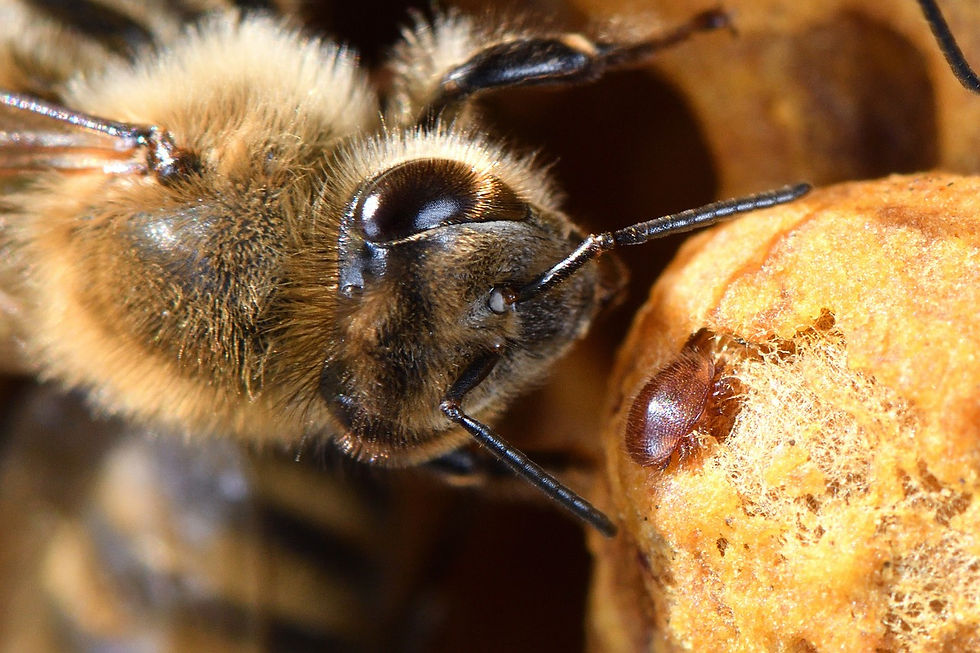
Varroa destructor, the most damaging pest of honeybees globally, was first detected in New South Wales in June 2022. An eradication response was launched before the National Management Group determined in September 2023 that it was no longer technically feasible to eradicate, and the response transitioned to long-term management.
This change from eradication to management means that should Varroa arrive in WA, any efforts to control it will be at the State Government’s expense despite the millions of dollars federally funded in the initial attempt to control the incursion in the east.
“These are simply the national rules for biosecurity responses, however while there is opportunity to maintain freedom from Varroa in WA with the geographical barriers of the Nullarbor and our vast arid rangelands, as well as regulated import restrictions, the local bee industry should be provided support to protect itself. This would align to the (ten) responses funded by the state government for the eradication of Queensland fruit fly, despite it being present in eastern Australia” said Ms Byrne.
“When a pest of this significance enters the country and the pathway still cannot be
identified, it raises legitimate questions about national biosecurity preparedness and
investigative capability, as well as the integrity and strength of state import restrictions”
“The lack of an identified entry pathway raises broader concerns for Australia’s biosecurity system as it currently remains as a potential door for other pests and diseases. That should worry not only beekeepers, but every agricultural industry that depends on an effective national biosecurity system.”
“The complexity of the task is understood, but effort is not the same as outcome and the investigators should not walk away just because it is difficult or complex.” Ms Byrne said.
Agricultural industries must continually demonstrate accountability and compliance through mandated biosecurity systems. The government should be no different. A four-year investigation that ends without an outcome is wholly inadequate and would not be an option for any private individual under government scrutiny.
The report says there was no prima facie evidence of a criminal offence, but that is not the same as saying that there was no indication of the potential entry pathway. This is the crux of why the report is unacceptable and why the industry can no longer have confidence in current biosecurity protocols, state or federal.
Ms Byrne stated, “Industry did not ask specifically for a prosecution… they asked for the gate that was open to be found and closed.”
The WA bee industry through BICWA is working hard to maintain Western Australia’s enviable Varroa-free status, which offers unique opportunities for the local bee industry. BICWA’s focus is on Varroa detection and response, pursued through two initiatives: one is an industry-funded trial of early detection technology, and the other is a federally funded project to establish a digital hive traceability system for DPIRD. Unfortunately, new state government policy is hindering BICWA and DPIRD from implementing this desperately needed system.
BICWA has also made every effort to access equivalent state funded support that other livestock industries have been afforded during the implementation of improved traceability systems for sheep and cattle.
“The absence of outcomes from the federal investigation increases anxiety, frustration, and erodes confidence in the biosecurity systems designed to protect us. The unique opportunities available to WA beekeepers remain precarious if government inaction persists and explanations regarding the shortcomings of biosecurity systems are not provided,” Ms Byrne concluded.
In the meantime, BICWA and the Australian Honeybee Industry Council (AHBIC) are calling on the Federal Government to take further action to ensure the investigation into the Varroa incursion continues and generates meaningful improvements in the Australian biosecurity system.
Government report can be found:
END
Media contact:
Mikey Cernotta – Vice Chair
0418 229 252
About BICWA: The Bee Industry Council of WA is the peak body representing commercial and recreational beekeepers in WA. BICWA works to support the WA bee industry, producers and associated organisations in the development of their industries through leadership, advocacy and active participation in policy, planning and awareness.


Comments